Product List
Learn more
Tips: Click the left icon  to expand the menu
News List
- Sany Marine Engineering's gantry crane accelerates with green and intelligent technology
- Komatsu hybrid excavator empowers the future of green mining
- The Wheel Digging Family: Witnessing True Longtermism with You
- Customized color selection for XCMG loaders
- Sany SY1650H Excavator Hardcore Debuts, Climbing to the Peak Again
- Zoomlion ZCC2200AE5 crawler crane officially goes on sale
- Zoomlion Bogota Customer Day Event Successfully Held
- Zoomlion R4300 tower crane completes precise lifting
- Liugong Loader 60th Anniversary Series Event
Komatsu hybrid excavator empowers the future of green mining
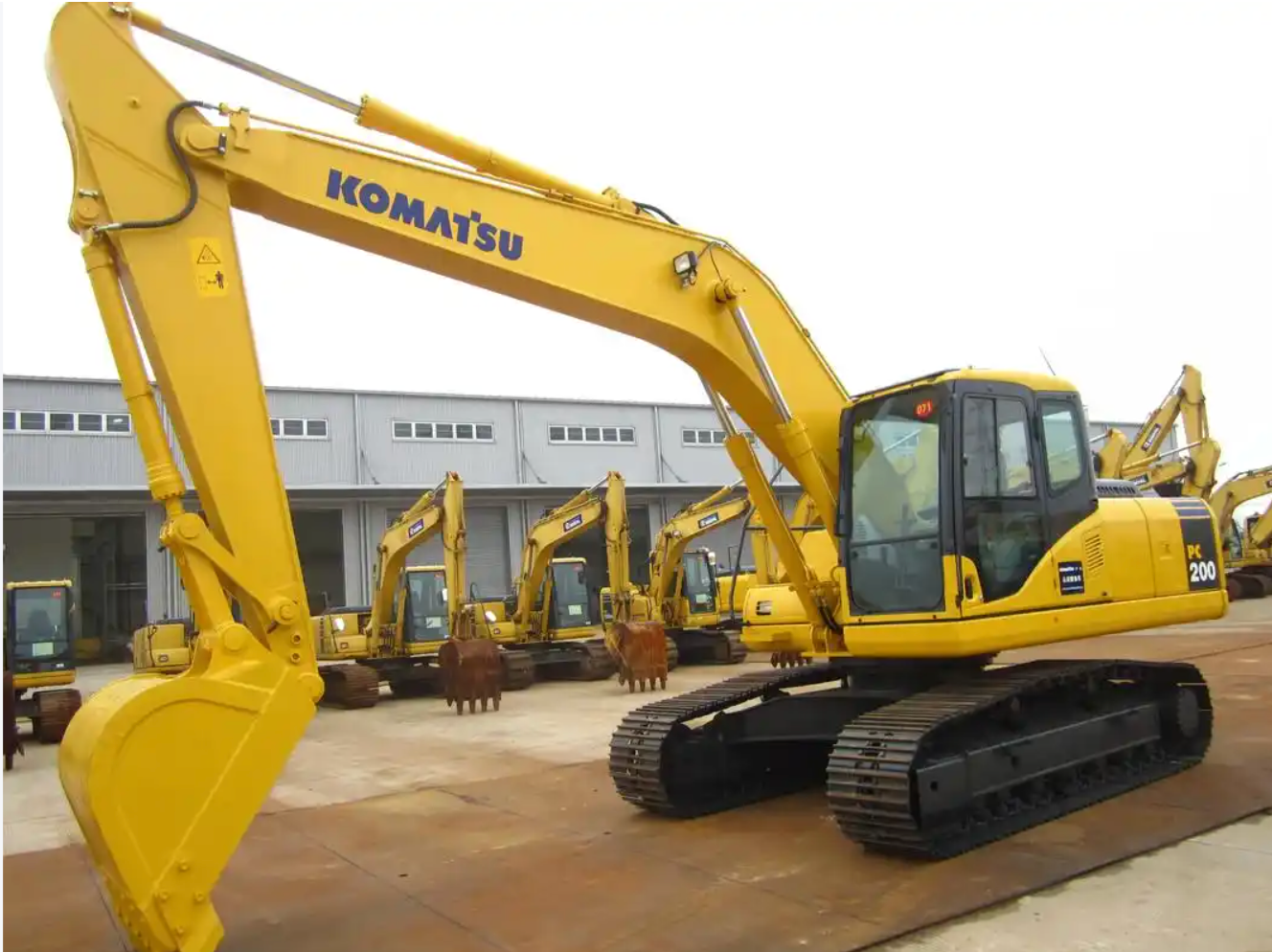
A batch of Komatsu PC395LC-11M0 hybrid excavators are undergoing extreme tests in hard rock mines in Guangdong, quarries in Guangxi, and high-altitude areas in western Sichuan. The commonalities among these places are: hard geology, high operational intensity, and complex working conditions. According to common sense, the fuel consumption of equipment in such environments is difficult to "look good"
The harder the construction site, the more fuel-efficient it is? What does Komatsu's hybrid excavator rely on? The answer lies in those 'difficult' scenes. At a large quarry in Guangxi, a PC395LC-11M0 is arranged on a high-intensity loading operation line. The rock hardness here is high, and the equipment operates almost 24/7, which is the traditional scenario of "oil consumption". But the trial results were completely opposite: under the same workload, this hybrid excavator consumes less fuel than traditional fuel powered models of the same tonnage as Komatsu. The operator feedback shows that the equipment has sufficient digging force and smooth compound movements when dealing with hard rocks. Surprisingly, the heavier the work, the more obvious the fuel saving effect.
At a large earthwork construction site in Guangdong, the Komatsu excavator PC395LC-11M0 also underwent high-intensity testing. The energy recovery and release process of the hybrid system was smooth and almost did not affect the work rhythm. In the high-altitude areas of western Sichuan, the equipment maintained stable power output even in low oxygen environments.
Why is hybrid technology more cost-effective under heavy working conditions?
The key behind this lies in Komatsu's hybrid technology logic. Traditional excavators often fail to fully utilize their kinetic energy in the form of thermal energy during rotary braking. The PC395LC-11M0 converts this energy into electrical energy through an electric rotary motor, which is stored and instantly released at high speed when the equipment needs to accelerate or lift, thereby assisting the engine and enhancing power output. This system not only reduces fuel consumption, but also reduces the load on the engine.
The more frequent the rotation and the heavier the working conditions, the more opportunities for energy recovery, and the more prominent the fuel saving effect. This is precisely the technical principle of 'the harder the construction site, the more fuel-efficient it is'. PC395LC-11M0 plays an important role in demonstrating that fuel efficiency and operational efficiency can be achieved simultaneously in Komatsu (China)'s product matrix. The core target users are medium and large mining truck users who are facing dual challenges of production cost pressure and environmental compliance. He calculated for the reporter that fuel costs account for about half of the total lifecycle cost of an excavator. And our goal is to solve the key pain point of high fuel costs for users through Komatsu's hybrid technology.